The Resistance in Cannes
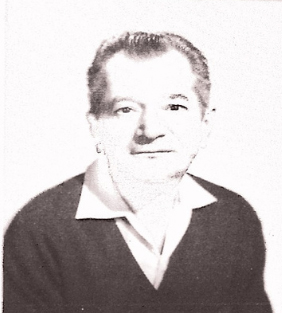
A typographer and Resistance fighter from Cannes, Guillaume Evangelista put his printing press and expertise at the service of the clandestine networks that worked for the Liberation.
His Resistance
in Cannes
Guillaume Evangelista and his companions worked in the shadows to fight against the occupier.
Entry into the Resistance
In 1942, Guillaume Evangelista began his resistance activities with Pierre Bertone.
Carte Network
The Carte network, linked to the SOE, brought together two Combat groups on the French Riviera.
AS24 Intelligence Service
Guillaume joined SOE Section F and served in AS24 intelligence with the rank of Sergeant AP2.
Cannes and the Tanneron Massif
The Cannes networks notably prepared contacts with the Maquis and a parachute drop in the Tanneron.
In 1942, Guillaume Evangelista was recruited and definitively joined SOE Section F, within the Free French Forces and the internal Resistance networks.
During the summer of 1942, the Carte network, in liaison with the Special Operations Executive, rallied two Combat groups present on the French Riviera. The invasion of the free zone pushed the Resistance fighters to strengthen the clandestinity and compartmentalization of their activities in order to confront the Abwehr.
The network would nevertheless be infiltrated by Gestapo or Abwehr agents. Pierre Bertone, known by the pseudonym Claude and presented as the head of the Carte network, was arrested on March 14, 1944.
The French branch of the SOE was placed under the direction of Colonel Maurice Buckmaster in London. After the division of the Carte network, Guillaume Evangelista was recruited by Henry Frager, André Girard's second-in-command, known by the pseudonym Louba, then head of the Donkeyman and Jean-Marie Action networks.
Guillaume worked in the AS24 intelligence service, under the orders of local manager Paul Krage, with Lieutenant Lacroix. With the rank of Sergeant AP2, he participated in various clandestine activities: dead drops, distribution of leaflets, transmission of messages, and intelligence.
The Networks in the SoutheastThe Buckmaster and SOE networks notably included the Jockey sub-network, while the SAP was linked to the BCRA and the AS designated the Secret Army.
The Buckmaster office in Marseille was directed by Francis Cammaerts, a British officer and SOE agent. He organized several networks in the Southeast responsible for sabotage actions against German forces.
In Cannes, Guillaume Evangelista was in contact with several Resistance fighters, including Léon Noël, who died from German torture, Ange-Marie Miniconi, commander of the Jean-Marie network in Cannes, and Stéphan Vahanian, a member of the United Movements of the Resistance (Mouvements unis de la Résistance).
The networks operated in Cannes, Mandelieu-La Bocca, Mougins, and Juan-les-Pins. Elements of the AS24 and MUR also gained the heights to prepare a parachute drop and make contact with the Maquis in the Tanneron massif.
The MUR were organized into two groups: a civilian group led by Marius Isaïa, known as Tony, who remained in Cannes, and a military group under the command of Stéphan Vahanian, known as Pierre, tasked with reaching the rendezvous point.
Cannes in 1944In June 1944, after the death of a German sergeant in Cannes, a fifteen-day curfew was imposed. An order from Algiers also planned to cut the railway line between La Bocca and Théoule.
The Kriegsmarine, based at the Hôtel Méditerranée, requisitioned the boats in the port of Cannes. The Old Port became a battleground while explosions notably hit the Croisette, Palm Beach, the Corne d’Or, and Les Hespérides.
On August 22, the city was violently attacked by Allied ships. A starving crowd went to the Cannes market in search of food when bombs exploded, causing injuries and deaths.
Seven people were taken prisoner, including Hélène Vagliano, a member of the American Tartane network and known for her involvement with the Cannes Prisoners' House. Some prisoners were tortured or shot. Hélène Vagliano herself was executed.
According to the account presented on the original page, these networks reportedly helped supply Resistance fighters with rifles, submachine guns, mortars, grenades, and financial resources.
Information
Gestapo
The infiltration, arrests, and repression of clandestine networks in Provence and on the French Riviera.
The Marsac Affair
According to several accounts, a briefcase containing nearly 200 uncoded names and their addresses allowed the German services to trace part of the Carte network.
German Occupation
After the occupation of the free zone and then the Italian armistice of 1943, German forces took direct control of Provence and the Alpes-Maritimes.
SIPO-SD, Section IV
Ernst Dunker, known as “Delage,” was assigned to the SIPO-SD in Marseille and participated in the hunt for Resistance fighters and Maquisards.
Marseille
The German services notably occupied premises located at 401-403 rue Paradis, associated with interrogations, violence, and repression.
The Gallia and the Mont-Fleury
In Cannes, these two establishments were requisitioned and used by Italian and then German repression services.
January 7, 1944
Guillaume Evangelista and the members of the Aegitna printing house were arrested by the SIPO-SD of Marseille.
The invasion of the free zone in November 1942, followed by the withdrawal of Italian forces in 1943, allowed Nazi Germany to take direct control of Provence and the Alpes-Maritimes.
The German services then sought to identify Resistance networks, intelligence agents, Maquisards, those refusing forced labor, political opponents, and Jewish people present in the region.
New surveillance and repression structures were established. Karl Klaus and Alfred Semisch were among the German officials deployed in the Southeast.
Requisitioned hotels, villas, and buildings were used to house agents, centralize intelligence, and organize arrests. Some of these places also became interrogation and torture centers.
The Marsac Affair and the Carte NetworkThe Marsac affair played an important role in identifying part of the Carte network. According to several versions, the German services got hold of a briefcase containing a list of approximately 200 people.
The names were reportedly written without coding, accompanied by the addresses or places of residence of their holders. This discovery facilitated the searches, surveillance, and arrests conducted by the Abwehr and then by the SIPO-SD.
Clandestinity then became even more dangerous. A denunciation, a seized document, or the arrest of a single agent could compromise several groups and sub-networks.
Ernst Dunker, known as “Delage”In a clandestine network, a simple document discovered by the occupier could endanger dozens of Resistance fighters and their families.
In 1944, Ernst Dunker was assigned to the SIPO-SD in Marseille, within Section IV responsible for combating opponents of the Nazi regime, Resistance fighters, and Maquisards.
Known as “Delage,” he is described as a former German repeat offender who became a non-commissioned officer in the Nazi security services.
Speaking perfect French, he reportedly frequented or occupied various luxury establishments to gather intelligence and identify individuals likely to have ties with the Resistance.
The services to which he belonged were associated with numerous acts of violence, interrogations under duress, torture, and executions.
In Marseille, they notably used premises located at 401-403 rue Paradis. Detainees were interrogated there before being released, transferred to a prison, or handed over to other German services.
Repression in CannesIn Cannes, many Resistance fighters, Jews, those refusing forced labor, and political opponents were arrested. Residents could also be apprehended following a denunciation or an activity considered hostile to the Nazi regime.
The Gallia and the Mont-Fleury were requisitioned by the occupation services. The Gallia is presented as a place used by the OVRA, the Italian fascist political police, while the Mont-Fleury became a center linked to the SIPO-SD.
These establishments hosted interrogations during which accusations were accompanied by blows, threats, and other abuses aimed at obtaining information on clandestine networks.
Other Cannes hotels were also occupied by the German authorities. A Standortkommandantur, responsible for local military administration, was installed in one of these requisitioned establishments.
The Arrest of Guillaume EvangelistaDespite the intensification of repression, Guillaume Evangelista continued his clandestine activities within the Aegitna printing house.
He continued to print the newspaper Combat, leaflets opposing the Nazi regime, posters, certificates, and false papers intended for Resistance fighters.
On January 7, 1944, Guillaume Evangelista and the members of his team were arrested by the SIPO-SD of Marseille, a service then under the operational authority to which Ernst Dunker belonged.
Guillaume was taken to the requisitioned premises in Cannes to be interrogated. The printing house staff were also questioned about clandestine activities, printed documents, and people frequenting the establishment.
He suffered blows and violence during the interrogations, but the German services did not obtain the information they sought. Guillaume ultimately remained alone in the hands of his torturers.
The Transfer to Les BaumettesGuillaume Evangelista was then transferred to Marseille, to Les Baumettes prison, then used for the incarceration of many Resistance fighters and prisoners under German authority.
His sister and son were able to visit him. They found his face bruised from the blows received during the interrogations.
This meeting was the last time they saw him before his transfer to the Compiègne-Royallieu camp, and then his deportation to German concentration camps.
After his arrest, Guillaume Evangelista refused to provide information that could compromise other members of the network.
The
Aegitna Printing House
A central place of the clandestine Resistance in Cannes.
Clandestine Printing House
The printing house produced false documents and clandestine newspapers and hosted secret meetings.
Six People Arrested
After an initial search, the German services returned and arrested six people present in the printing house.
January 7, 1944
Guillaume Evangelista was arrested at his workplace with the members of his team.
Hôtel Mont-Fleury and Gallia
The arrested individuals were taken to requisitioned interrogation and torture sites in Cannes.
Informed of the clandestine activities of the Aegitna printing house, the Gestapo first conducted a search, then returned to arrest the six people working there.
The arrested individuals were taken to the Hôtel Mont-Fleury for interrogation and torture. Some were then transferred to the Gallia, which had become a place of incarceration and torture, then to Nice before their deportation.
January 7, 1944On January 7, 1944, Guillaume Evangelista was at his post with his team when trucks from the Gestapo of Marseille and the Sicherheitsdienst arrived in front of the printing house.
The SS entered the premises and arrested everyone present for acts of resistance and treason against the Nazi regime. The alleged activities included the production of false documents, the organization of secret meetings, and the printing of clandestine newspapers.
The Requisitioned HotelsThe arrest of January 7, 1944, put an end to the resistance activities organized from the Aegitna printing house.
Guillaume was taken to the Hôtel Mont-Fleury, presented as the local headquarters of the SIPO-SD, then to the Gallia, headquarters of the OVRA, to be interrogated and tortured.
Several Cannes establishments were then occupied or requisitioned by German forces, notably the Majestic, the Mont-Fleury, and the villa of the same name.
Large hotels such as the Martinez, the Miramar, and the Carlton were also subjected to searches aimed at checking the identity of guests and looking for traces of propaganda.
His
Arrest
From Cannes to Compiègne-Royallieu, before deportation.
Hôtel Mont-Fleury
Guillaume was first taken to the Cannes headquarters of the SIPO-SD to be interrogated and tortured.
Gallia then Nice
He was transferred to the Gallia, then to the Hôtel Excelsior in Nice, where interrogations continued.
Les Baumettes Prison
Guillaume was then imprisoned at Grandes Baumettes in Marseille before his transfer to the camps.
Compiègne-Royallieu
He was sent in a freight train to the Compiègne-Royallieu transit camp.
After his arrest, Guillaume Evangelista experienced a succession of transfers, interrogations, and tortures before his departure for the camps.
He was first taken to the Hôtel Mont-Fleury, then to the Gallia in Cannes. He was then transferred to Nice, to the Hôtel Excelsior, where he underwent further interrogations.
His journey continued at the Grandes Baumettes prison in Marseille. His godmother managed to visit him before his transfer to the camps.
Guillaume was then transported in a freight train to Compiègne-Royallieu. Although located in France, this transit camp was directly dependent on the German authorities and prepared prisoners for their deportation.
His identification record indicates a birth in November 1906 in Marseille and classifies him in the German preventive detention category “Schutzhaft.”
Schutzhaft refers to a detention measure applied by the Nazi regime to individuals considered likely to threaten the security of the state and the German people.
Documentation: Arrest
Consult documents, administrative records, photographs, and archives tracing the arrest and detention journey of Guillaume Evangelista.
Henry
Frager
Resistance fighter of the Carte network and head of the Donkeyman network.
Carte Network
Henry Frager joined the Resistance within the Carte network.
Donkeyman Network
He later became the head of the Donkeyman network.
Jean-Marie Action
His network is also known as Jean-Marie Action.
Office in Marseille
Henry Frager had an office in Marseille, where Guillaume Evangelista would meet him.
A Resistance fighter within the Carte network, Henry Frager would become the head of the Donkeyman network, or Jean-Marie Action, attached to Section F of the Special Operations Executive directed by Maurice Buckmaster.
He had an office in Marseille, where Guillaume Evangelista would meet him as part of the network's activities.
Arrest and DeportationHenry Frager was arrested and then transferred to Fresnes prison.
He was then deported to Buchenwald camp, where he was shot.
Following his arrest, the network was dismantled.
Documents on Henry Frager
Consult documents and archives to delve deeper into his journey, his commitment, and his role within the Carte and Donkeyman networks.
Cannes during the 1939-1945 War
Discover several resources to delve deeper into the political, cultural, and historical context of Cannes before and during the Second World War.
Winston Churchill in Cannes
An article dedicated to the links between Winston Churchill, Cannes, painting, and politics.
The Cannes Conference of 1922
Sir Lloyd George and the European peace negotiations organized in Cannes after the First World War.
The History of the Cannes Film Festival
The Cannes Film Festival through the Second World War and the events that delayed its development.

